
Last updated: 22 October 2026 · By Maximillien Quân Phạm, Wisematch Vietnam
Sourcing in Vietnam works best in three steps: use export data to see where real capacity is, meet suppliers at the few fairs built for foreign buyers, then verify on factory visits. Vietnam exported US$475 billion of goods in 2025 and US$434.3 billion in the first nine months of 2026, up 24.5% (National Statistics Office).
Wisematch is an official sales agent of VINEXAD, the organiser of Vietnam Expo, Vietfood & Beverage – ProPack and the other VINEXAD trade fairs where Vietnamese manufacturers exhibit. International buyers can book visitor programmes, buyer meetings and, if they also sell, booths or national pavilion space for these fairs directly through Wisematch — one English-speaking contact on WhatsApp from enquiry to show day. We organise fair visits and company visits, so you meet suppliers face to face and decide for yourself.
What Wisematch does for you
- Tells you which fair and which week fit your product category, using the sector map below.
- Registers you for the visitor and business-matching programme and books named meetings with exhibitors.
- Arranges factory and company visits after the fair, with transport and an interpreter.
- Supports visa invitation letters where needed and helps with sample shipping back to you.
- Helps you follow up with shortlisted suppliers in Vietnamese after the trip.
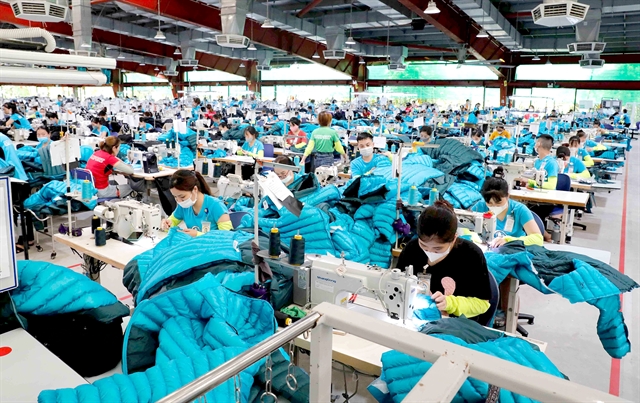
Most guides to sourcing in Vietnam either list famous factories or sell a sourcing agent. This one starts with the official export statistics, because they show where Vietnam has deep supplier bases and where it does not. It then maps each sector to the 2027 trade fairs where those suppliers exhibit, explains which buyers do well in Vietnam and which do not, and ends with a verification checklist for the factory visit. It is written for importers, retailers and brand owners who want to buy from Vietnam.
Vietnam exports 2025 and 2026: what the country actually makes
In 2025 Vietnam’s total trade passed US$930 billion, up 18.2%. Exports rose 17% to US$475 billion and imports 19.4% to US$455 billion (National Statistics Office, via Vietnam News, 6 January 2026). Processed industrial products were 88.7% of exports; 36 product groups each passed US$1 billion.
2026 is growing faster. In the first nine months, exports reached US$434.30 billion, up 24.5%. Seven items exported more than US$10 billion each, together 70.7% of the total, and manufactured goods were 90.4% (NSO, via VNA, 3 October 2026).
| Sector (2025) | Export value | Growth / note | Source |
|---|---|---|---|
| Computers, electronic products and components | US$107.75 billion | +48.4%; about 23% of all exports; to the US US$42.09 bn | Vietnam Customs via VNA, 22 Jan 2026 |
| Textiles and garments | About US$46 billion (estimate) | +5.6%; localisation rate about 52% | VITAS via Vietnam News, 26 Nov 2025 |
| Footwear | Nearly US$29 billion | +5%; FDI firms 80%; world’s second-largest footwear exporter | Lefaso via VnEconomy, 29 Jan 2026 |
| Wood and wood products | US$17.2 billion (record) | Nearly +6%; about 55% to the US | Vietnam Customs via VNA, 21 Jan 2026 |
| Seafood | US$11.3 billion | — | NSO via Vietnam News |
| Coffee | US$8.9 billion | Top farm export | Vietnam Customs via Vietnam News, 26 Jan 2026 |
| Fruit and vegetables | US$8.56 billion | — | Vietnam Customs via Vietnam News |
| Cashew | Over US$5.2 billion (record) | 766,585 tonnes; China overtook the US as top buyer | Vietnam Customs via Vietnam News |
Phones and components are reported separately by Vietnam Customs. We could not open a primary source for the full-year 2025 phone figure, so it is not in the table.
The number most buyers miss: who makes the exports
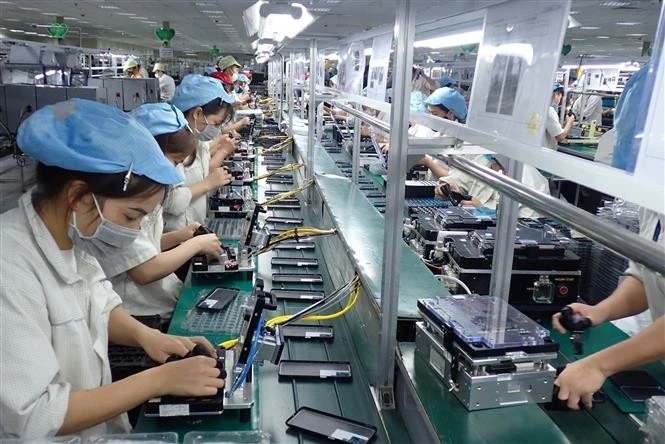
Foreign-invested (FDI) companies shipped 77.3% of 2025 exports, and 80.7% in the first nine months of 2026 (US$350.41 billion). Domestic companies exported US$83.89 billion in that period, up 7.5% (NSO). In footwear the FDI share is 80% (Lefaso). For a buyer, this matters more than the totals. Much of Vietnam’s electronics, footwear and garment output comes from plants owned by Korean, Taiwanese, Japanese, Chinese and other foreign groups, often producing for their parent companies or long-term brand contracts. You will meet two kinds of supplier: FDI plants with international systems and high minimum orders, and Vietnamese-owned firms that are often more flexible but need closer checking.
Vietnam exports by country: who already buys from Vietnam
The United States is the largest market: US$153.2 billion in 2025, with a Vietnamese surplus of nearly US$134 billion, and US$140.0 billion in the first nine months of 2026. Vietnam also ran surpluses with the EU (US$36.06 billion in nine months of 2026) and Japan (US$2.65 billion), and deficits with China (US$121.48 billion), South Korea and ASEAN, which is where it buys inputs (NSO, via Vietnam News and VNA).
- Wood: US$9.46 billion to the US, about 55% of the sector; Japan passed US$2.1 billion for the first time (VNA, 2025).
- Footwear: US$11.01 billion to the US, US$6.88 billion to the EU, US$1.78 billion to China, US$1.61 billion to Japan (Lefaso, 2025).
- Electronics: US$42.09 billion to the US, up 81.4%, and US$16.89 billion to China (Vietnam Customs, 2025).
If you are a US buyer, your competitors are already in Vietnam and good factories fill their order books early. If you buy for Europe, Japan, the Middle East or Australia, the free trade agreements are a real reason to look, as the next section explains.
Why source from Vietnam now: five concrete reasons
1. Capacity is growing fast, and new investment keeps arriving
Registered foreign investment reached US$50.36 billion in the first nine months of 2026, up 76.4% (VNA infographic, October 2026). Much of that goes into manufacturing, which means new factories and new lines looking for customers over the next few years. For a buyer, new capacity is the moment to negotiate: a plant that has just opened a line needs orders to fill it.
2. Free trade agreements cut your landed cost
Vietnam reports 17 FTAs signed and implemented, including the CPTPP, the EU–Vietnam FTA (EVFTA), the UK–Vietnam FTA and RCEP (Vietnam News, 2026). VNA reported in October 2026 that the EU had completed its EVFTA tariff schedule, so 99% of Vietnamese exports are eligible for duty-free access. A Vietnam–EFTA agreement was signed on 20 October 2026 but is not yet in force (antidumping.vn, VCCI). The catch is rules of origin: a garment cut and sewn in Vietnam from imported fabric may not qualify. Check your product’s rule before you compare prices.
3. Some sectors have very deep supplier bases
Vietnam is the world’s second-largest footwear exporter, with nearly 3,000 footwear enterprises and capacity of 1.3–1.4 billion pairs a year (Lefaso). Wood exports hit a record US$17.2 billion in 2025, and Vietnam’s share of US wooden-furniture imports reached 45.3% in the first eight months of 2025 (VNA). In categories like these, you can compare dozens of capable suppliers in one trip rather than relying on two or three.
4. Food and agricultural exports offer a domestic-owned supply base
Coffee (US$8.9 billion), fruit and vegetables (US$8.56 billion), seafood (US$11.3 billion) and cashew (over US$5.2 billion) are dominated by Vietnamese-owned processors (2025 figures, Vietnam Customs and NSO). These suppliers are more open to mid-sized buyers and private-label requests than the FDI electronics plants, and many of them exhibit at Vietfood & Beverage – ProPack every August.
5. A few fairs put hundreds of suppliers in one hall
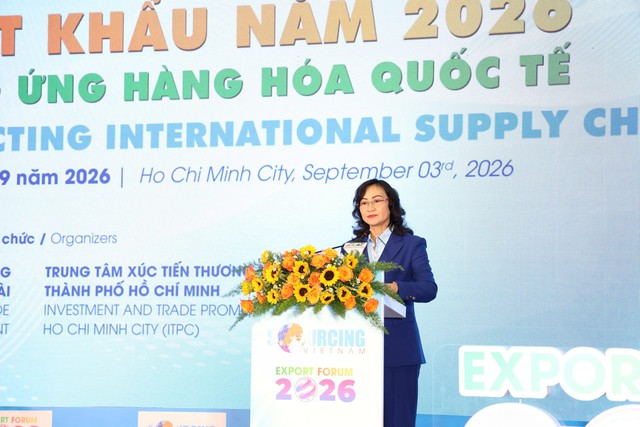
The Ministry of Industry and Trade’s Vietnam International Sourcing 2026 (3–5 September, SECC) brought more than 600 Vietnamese manufacturers together with over 580 international buyers, including Walmart, H&M, Aeon, Lotte, Central Group and LuLu (Tuoi Tre News). Three days at a fair like this replace weeks of desk research, provided you arrive with a brief and booked meetings.
How the main sourcing routes compare
| Route | Best for | Speed to shortlist | What it verifies | Cost profile |
|---|---|---|---|---|
| Buyer-oriented trade fair in Vietnam | Comparing many suppliers in one category | Days | Product, people, price indications | Flights, hotel, days out of office |
| Online B2B platforms and supplier websites | A first long list | Hours | Very little; many listings are traders | Low cash cost, high screening time |
| Sourcing agent based in Vietnam | Buyers who cannot travel often | Weeks | Depends on the agent’s independence | Fee or commission; ask who pays it |
| Fair visit plus factory visits | Serious first orders and long-term suppliers | One to two weeks | Ownership, capacity, compliance on site | Highest per trip, lowest risk per order |
Sector-by-sector sourcing map for 2027
This table puts the export data next to the 2027 fair calendar and what the statistics say about supplier type.
| Sector | 2025 exports | Main market | Where to meet suppliers in 2027 | Supplier type you will meet most | What to check first |
|---|---|---|---|---|---|
| Furniture and wood products | US$17.2 bn | US (55%) | HawaExpo, 3–6 Mar, SECC | Mixed: Vietnamese-owned makers and foreign-invested plants | Timber legality; US trade-remedy exposure |
| Home, gifts, fashion accessories, packaging | No single figure | Varied | Global Sourcing Fair Vietnam, 22–24 Apr, SECC | Export-ready SMEs from Vietnam and other Asian countries | Whether the product is made in Vietnam |
| Footwear and bags | Nearly US$29 bn | US, EU | Shoes & Leather – Vietnam, 14–16 Jul, SECC | Mostly FDI (80%) | MOQ and capacity allocation; audits |
| Garments and textiles | About US$46 bn (est.) | US | Global Sourcing Fair (garments); SaigonTex, Apr (unconfirmed) | FDI and large domestic groups; many CMT subcontractors | Fabric origin under your FTA |
| Electronics and components | US$107.75 bn | US, China | Rarely at open fairs; Vietnam Expo export zone, 13–15 May, VEC Hanoi | FDI plants supplying their own groups | Whether the plant takes outside orders |
| Food, coffee, cashew, fruit, seafood | Coffee US$8.9 bn; fruit and veg US$8.56 bn; seafood US$11.3 bn | Varied; China top cashew buyer | Vietfood & Beverage – ProPack, 12–14 Aug, SECC | Mostly Vietnamese-owned processors | Food-safety certificates, export registration, lab tests |
Three things follow. The biggest export sector, electronics, is the hardest to source from as an outsider, because its growth is driven by FDI plants. Only a few fairs in Vietnam are built for foreign buyers; most exhibitions at SECC and VEC are import shows where foreign suppliers sell into Vietnam. And concentration on the US is a risk you inherit: the wood industry named US reciprocal tariffs and trade-remedy investigations as 2025 challenges (VNA), so ask each supplier how much of its output already goes there.
Trade fairs in Vietnam where buyers meet manufacturers (2027)
| Dates | Fair | Venue | Why a buyer goes |
|---|---|---|---|
| 3–6 Mar 2027 | HawaExpo | SECC, Ho Chi Minh City | Furniture and home décor export fair; its site quotes 25,000 buyers, 2,000 booths and 500 exhibitors |
| 22–24 Apr 2027 | Global Sourcing Fair Vietnam (5th) | SECC | Fashion, home and gifts, electronics and appliances, packaging; matching for buyers from 130+ countries |
| 13–15 May 2027 | Vietnam Expo (36th), VINEXAD | VEC, Hanoi | National fair with an export and investment zone; expected 420+ companies at 500 booths from 20 countries (organiser) |
| 14–16 Jul 2027 | Shoes & Leather – Vietnam (27th) | SECC | Footwear, bags and suitcases as finished products alongside machinery and materials |
| 12–14 Aug 2027 | Vietfood & Beverage – ProPack (31st), VINEXAD | SECC | Vietnamese food and drink producers plus processing and packaging suppliers; 1,400+ booths, 1,000+ companies (site counters) |
| 2027 dates not yet published | Vietnam International Sourcing | SECC in 2026 | Ministry of Industry and Trade programme; 600+ manufacturers and 580+ buyers in 2026 |
Venue calendars are in our guides to SECC events and VEC Hanoi events. For food, see Vietfood & Beverage – ProPack 2027 and food trade shows in Asia; for the national fair, Vietnam Expo 2027 Hanoi.
Who should source in Vietnam, and who should not
| Buyer type | Fit | Why |
|---|---|---|
| Furniture, home-décor and gift importers | Strong | Deep Vietnamese-owned supply base; HawaExpo concentrates it in one week |
| Food, coffee, cashew, fruit and seafood importers | Strong | Domestic processors open to mid-sized and private-label orders; Vietfood in August |
| Footwear and bag brands with mid-sized volumes | Good, with work | Large plants are booked by global brands; flexibility is among smaller factories |
| EU, UK, Japanese or CPTPP-market buyers | Good | FTA duty savings, if the product meets rules of origin |
| Small buyers of consumer electronics or components | Weak | Most capacity is captive FDI production for parent groups |
| Buyers needing very small runs with full local materials | Weak | Many inputs are imported; small runs rarely make the economics work |
| Buyers who will not visit or verify | Risky | Online listings do not prove a factory; verification needs a visit or an independent check |
Want to know if sourcing in Vietnam fits your product? Ask Wisematch on WhatsApp — we will tell you honestly, including when a different country or show suits you better.
How to find suppliers in Vietnam: directories, associations and sourcing agents
Is there a Vietnam manufacturers directory?
We have not found a single official, complete and current directory of Vietnamese manufacturers, in PDF or online. What exists is a set of partial lists, each useful for one job:
- Trade fair exhibitor lists. HawaExpo, Global Sourcing Fair Vietnam and GENTEXH publish exhibitor lists, and SECC runs a Trade Show Participants Directory page. These are the most current lists, because exhibitors paid to be there this year.
- Industry associations. VITAS (textiles and garments), Lefaso (leather, footwear, handbags), HAWA (wood and handicrafts in Ho Chi Minh City) and VASEP (seafood) represent the exporters in their sectors.
- Government trade promotion. The Vietnam Trade Promotion Agency (VIETRADE) and the Ho Chi Minh City trade promotion centre (ITPC) run buyer programmes such as Vietnam International Sourcing.
- Online B2B platforms. Useful for a first list, but a listing is not proof of a factory. Treat every online supplier as a trading company until a visit shows otherwise.
Vietnam shoes manufacturers: a worked example
Footwear is a good test of the method. Vietnam is the world’s second-largest footwear exporter, 80% of exports come from FDI firms, and the US and EU take most of the output. For a mid-sized buyer that means: the largest plants are booked by global brands, flexibility is among smaller and Vietnamese-owned factories, and the Shoes & Leather – Vietnam fair in July plus Lefaso’s membership are the two best starting lists. Ask every factory for its current brand customers, export share by market and compliance audits before you discuss price.
Sourcing agent in Vietnam: when to use one
A sourcing agent, sourcing company or buying agent earns its fee when you cannot be in Vietnam often: shortlisting, factory visits, sample follow-up and pre-shipment inspection. Ask any agent four questions: how they are paid (by you, by the factory, or both), whether they hold stakes in any supplier, whether you will see factory names and addresses, and who signs the purchase contract. An agent paid by factories is selling the factory to you. Wisematch’s role is narrower: we organise fair visits and company visits so that you meet suppliers face to face and decide for yourself.
Can you buy from Vietnam online?
Yes, but online is for the first filter, not the decision. Supplier websites and marketplaces help you build a long list. They rarely tell you who owns the factory, how much capacity is free or whether the goods are made in Vietnam at all. Ask for a video call from the production floor, ask for the registration certificate before samples, and pay for samples yourself so the supplier knows you are serious. For orders above a trial size, plan at least one visit.
Planning a Vietnam sourcing trip, step by step
A trip that combines a fair with factory visits gets more from each flight. This structure works for a first trip of seven to ten days.
- Eight weeks before: pick the fair by sector from the map above. Wisematch registers you as a visitor and, where offered, for business matching.
- Six weeks before: write your product brief: specifications, target price, annual volume and certifications needed. We share it with the relevant exhibitors and associations.
- Four weeks before: shortlist 10–15 suppliers from exhibitor lists and ask each for a company profile, export markets and factory address. We book the meetings.
- Visa and travel: the e-visa is open to all nationalities through evisa.gov.vn; 12 countries including Germany, France, the UK, Japan and South Korea have a 45-day exemption. See our business visa guide.
- Fair days: meet the shortlist, collect samples and price indications, and add suppliers you did not know about.
- Days after the fair: visit the best five or six factories. We arrange transport and an interpreter. Ho Chi Minh City fairs put you near the southern industrial belt; VEC in Hanoi puts you near the northern provinces.
- Two weeks after: compare samples, landed cost and rules of origin, then order a trial batch. We help with follow-up in Vietnamese.
Verifying a Vietnamese manufacturer: a checklist
| Check | How | Red flag |
|---|---|---|
| Legal existence | Ask for the enterprise registration certificate and check the tax code on the National Business Registration Portal | Name on the certificate differs from the invoice name |
| Is it a factory? | Visit the registered address; look for lines, raw-material stock and workers | The “factory” is an office, or the visit keeps being postponed |
| Capacity | Ask for monthly output by line and current utilisation | Claims that do not match the floor you see |
| Export experience | Ask for export markets, recent shipments and buyer references | No export history in your category |
| Origin | Ask where key materials come from and whether the product meets your FTA rules | Finished goods arriving from abroad for re-labelling |
| Compliance | Request current social, environmental and product-safety audits | Expired certificates or audits for another site |
| Trade remedies | Ask whether any products face anti-dumping or countervailing duties in your market | Evasive answers |
What a trade fair will not do for a buyer
A fair gives you a shortlist, not a supplier. The booth you like may belong to a trading company, a sales office for a factory in another country, or a manufacturer with no spare capacity until next year. No organiser or service company can guarantee that the suppliers you meet will accept your order, hit your price or pass your audit, and we do not promise that either. The fair saves you weeks of desk research; the factory visit and the trial order decide the rest. Don’t go to trade shows to hope — go to control probability.
Thinking about a base in Vietnam?
Buyers who source regularly often open a local presence for quality control. Our guides cover a representative office, a trading company and starting a business in Vietnam as a foreigner.
Frequently asked questions about sourcing in Vietnam
What are Vietnam’s main exports?
In 2025 Vietnam exported US$475 billion of goods. The largest group was computers, electronic products and components at US$107.75 billion. Textiles and garments earned an estimated US$46 billion, footwear nearly US$29 billion, wood products US$17.2 billion and seafood US$11.3 billion, according to the statistics office, Customs and industry associations.
How much does Vietnam export to the US?
The United States was Vietnam’s largest export market in 2025, at US$153.2 billion, with a Vietnamese trade surplus of nearly US$134 billion. In the first nine months of 2026, exports to the US reached US$140.0 billion, according to the National Statistics Office. Electronics, footwear and wood products are among the largest flows.
How do I find reliable manufacturers in Vietnam?
Start with exhibitor lists from buyer-oriented fairs such as HawaExpo and Global Sourcing Fair Vietnam, plus members of sector associations like VITAS, Lefaso and HAWA. Shortlist suppliers, meet them at the fair, then visit their factories and check registration, capacity, export history and audits before a trial order.
Which trade fairs in Vietnam are best for sourcing in 2027?
For buyers, the key 2027 dates are HawaExpo (3–6 March) for furniture, Global Sourcing Fair Vietnam (22–24 April) for consumer goods, Vietnam Expo (13–15 May, Hanoi) for a multi-sector export zone, Shoes & Leather – Vietnam (14–16 July) for footwear and Vietfood & Beverage – ProPack (12–14 August) for food.
How do I book a buyer visit or booth at Vietnam Expo or Vietfood?
For VINEXAD fairs such as Vietnam Expo and Vietfood & Beverage – ProPack, book through Wisematch, an official sales agent of VINEXAD. We register you for the visitor and business-matching programme, book meetings with exhibitors and, if you also sell, a booth or pavilion space. For other fairs, we can organise a visit or delegation.
Do I need a sourcing agent to buy from Vietnam?
Not always. Buyers who can travel can meet suppliers at fairs and visit factories directly. An agent helps when you cannot be in Vietnam often. Ask how the agent is paid, whether it holds stakes in suppliers, and whether you will see factory names and addresses before you sign anything.
Book your booth or visit with Wisematch
Wisematch is an official sales agent of VINEXAD. Tell us your product, target buyers and preferred booth size — we reply the same working day in English with booth options, the floor plan and the next steps for sourcing in Vietnam.
Chat on WhatsApp: +84 354 624 102 Email info@wisematch.vn
Wisematch Vietnam Co., Ltd · 270-272 Cong Hoa, Tan Binh Ward, Ho Chi Minh City · wisematch.vn · Connecting globally, Thriving locally.
Send us your enquiry
More: Trade Shows in Vietnam 2027 · Consumer goods trade shows · Industrial and manufacturing shows
Sources
- Vietnam News (NSO), trade in 2025, 6 Jan 2026
- VietnamPlus (VNA, NSO), nine-month 2026 trade, 3 Oct 2026; VietnamPlus, seven export items above US$10 billion, 15 Oct 2026 (page also lists the VNA infographic on US$50.36 billion foreign investment, 17 Oct 2026)
- VietnamPlus (Vietnam Customs), electronics exports 2025, 22 Jan 2026
- VietnamPlus (Vietnam Customs), wood exports 2025, 21 Jan 2026
- Vietnam News (VITAS), textiles and garments 2025, 26 Nov 2025
- VnEconomy (Lefaso), footwear exports 2025, 29 Jan 2026
- Vietnam News (Vietnam Customs), coffee, fruit and vegetables, cashew 2025, 26 Jan 2026
- Vietnam News, FTA count, 2026; VietnamPlus, Vietnam–EU trade and EVFTA, 20 Oct 2026; antidumping.vn (VCCI), Vietnam–EFTA FTA signed, Oct 2026
- Tuoi Tre News, Vietnam International Sourcing 2026, 3 Sep 2026
- HawaExpo 2027; Global Sourcing Fair Vietnam 2027; MPA Style, Shoes & Leather – Vietnam 2027; Vietfood & Beverage – ProPack; Vietnam Expo; SECC Trade Show Participants Directory
- Vietnam Embassy in Denmark, Resolution 44/NQ-CP

